

Why Do Autistic Kids Like Video Games? What a 4th Grader Taught Me
Nov 04, 2026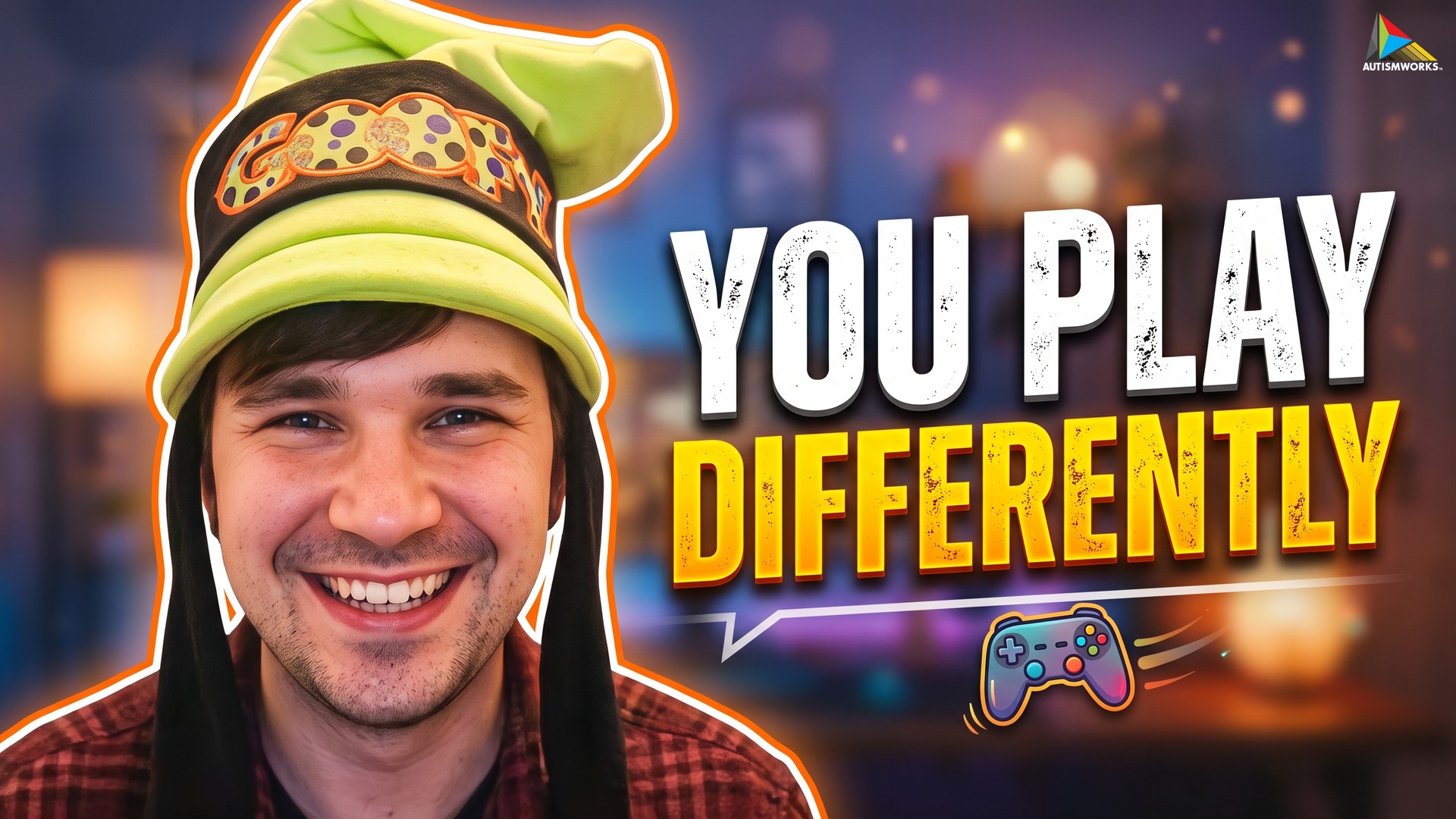
Maybe your child picks up the controller, and the rest of the house fades away. You call their name, and they're deep in the game.
If you're asking "Why do autistic kids like video games?", I want to answer from the inside. My name is Tyler McNamer, and I'm an adult with autism. When it comes to autism and video games, I can only speak for myself.
My short answer: I grew up on computer games, and for me, the computer is calming and a real challenge. The colors and sounds are like fidgets for my eyes and ears, and it's a recharge station.
And the best response I got came from a young kid at one of my school talks, who I believe was in fourth grade:
"You think differently. I'm sure that you play differently."
I had never thought of it that way.
▶ Prefer to watch? See my video: What a 4th Grader Taught Me About Autism and Gaming
My own reasons: why I love computers and computer games
I grew up with computers. I've been interested in them since I was four, and I built one with the help of my dad when I was twelve. Back then, it was all computer games. Here are my personal reasons for loving the machine:
- Fidgets for the eyes. I'm always into colors of any kind. The colors on the screen are pleasing to the eyes.
- Fidgets for the ears. Since I was little, I've noticed a whole lot of specific noises coming from the computer, like the fan and the CD spinning. For whatever reason, I find it very calming.
- A recharge station. The cave, the bathtub, my room, and the computer too. With so much stimulus, it's nice to go back to the computer in my room.
- All mental, no physical challenge. I work better when there's a challenge being given. It's the thrill of the challenge that motivates me.
As for video games, I wrote that they let the player be a part of the fantasy and make it feel so real. A lot of kids love that. You can read more in Computers and Video Games.
Tyler's tip: I believe everyone should be challenged with something. It gives good strength and encouragement.
What a 4th grader taught me about autism and video games
I was at a school, talking to the kids about treating others who are different. I always tell folks not to talk down or slow their speech. Just talk normally. Those who are different are free to ask questions.
When it's time for questions, kids always come up with some of the hardest ones, and they really make me think. I've said it time and time again: kids are smart. They're good kids, and all they deserve is some guidance.
One young kid asked me, "Hey, do you have a Twitch account?"
I did not. I didn't even know what Twitch was. He told me it's a website where you play video games and people watch you play.
In my head I was thinking, why would people do that? But I didn't say it like that. I said it sounded really interesting. I was curious, so I asked him: what's the appeal?
Here's what he told me: "You think differently. I'm sure that you play differently."
One of my favorite parts of my job is that I get to learn new things too. I learn a whole lot from both adults and children.
Tyler's tip: Kids are smart. They're good kids, and all they deserve is some guidance.
So I gave video game streaming a try
After hearing that young kid's answer, I tried Twitch under my own name, Tyler McNamer. And it was fun.
There used to be a thing on Twitch called Twitch Sings, a virtual karaoke bar. It isn't available at the moment, but I used to sing there. It's fun to perform, whether I'm on stage as a keynote speaker or singing in a digital karaoke bar.
The fun part was that I could drop the professional act and be a goofball. One time I brought a bag of chips into a lobby and munched on the microphone. I was like, "I'm starving, there's nothing to eat in this game." People got a good kick out of that.
I did it for free, and I don't record those moments. Either you're there or you're not. That's how I did things back in high school too: for fun, and for the freedom to be goofy.
Tyler's tip: It's fun to perform. For me, the fun part was dropping the professional act and being a goofball.
How I play video games: no commentary, just my own music
I did play games on Twitch, but I didn't really like doing the whole vocal commentary. A lot of folks do it. They're entertainers, and they bring their own perspectives.
For me, if I were to speak while I play, I feel like I would ruin the moment. That young kid was super smart. You think differently, so you probably play differently.
So here's what I like to do. I mute the music in the game and play something from Napster, Spotify, or my CD collection. Then I let the music take control and tell the story.
When I play like this, the only audience member I have is myself. And honestly, it feels good to be my only viewer, because it's quiet, and I like the quiet. I wrote more about that in Why Does My Autistic Child Want to Be Alone?
What that kid taught me: You think differently, so you probably play differently. My way is no commentary and my own music.
Do I have to play video games like the popular folks?
I'm definitely not a professional at this. I'm still a beginner. The good thing is, I tried it, and it was fun.
I always kind of worry: do I have to be like all these other popular folks? I can improve on some things. But I don't want to feel like I'm selling out, or trying to be like this person or that person.
Back in school, I was definitely the goofball. It felt natural. It felt genuine. I didn't feel pressured to perform.
Funny thing is, a lot of video game players have wanted me to be in tournaments, because I'm so good at hand eye coordination and being quick with the buttons and joysticks. I turned them down, because I don't feel comfortable making money playing games.
Tyler's tip: I can improve on some things. But I don't want to feel like I'm selling out, or trying to be like this person or that person.
What parents of autistic kids can take from my story
If your autistic child loves video games, here's what I'd want you to know, from my own life:
- Ask about the appeal. I asked a kid "what's the appeal?" and got the best response. Your child may surprise you too.
- Let them play their way. No commentary and my own music is my way. You think differently, so you probably play differently.
- Quiet play can feel good. It feels good to be my only viewer, because I like the quiet.
- Leave room for goofy. For me, being the goofball felt natural and genuine.
- They don't have to copy the popular players. I don't want to feel like I'm selling out, or trying to be like this person or that person.
- Age appropriate games, and breaks. I almost always played age appropriate games, and I'm glad I did. And it's always important to take computer breaks and get away from the screen.
FAQ: autism and video games
Why do autistic kids like video games?
I can only speak for myself. With computers and computer games, the colors and sounds are like fidgets for me, the computer is a recharge station, and I work better with a challenge. A young kid at one of my school talks said it this way: "You think differently. I'm sure that you play differently."
Do autistic kids play video games differently?
I can tell you how I play. I mute the game's music, play my own, and skip the commentary, because I feel like talking would ruin the moment.
Are video games good for autism?
I can tell you what it was like for me. On Twitch, it was fun and I got to perform. Growing up, computer games helped me with academics, and also with certain sounds I could get used to and different facial expressions. The best part was that I could take as long as I wanted for each activity. I wrote about that in Computer Games.
Should I let my autistic child play video games?
That's your call as a parent. Here's my own view: not all video games are bad. I almost always played age appropriate titles. If I played a title that wasn't appropriate for me, I would get in big trouble and write "I will not play violent video games." over a hundred times, in paper and pencil. Thinking back, I'm glad I played those age appropriate games.
Is it normal for an autistic child to be obsessed with video games?
I can only tell you about me. I love the computer, and I try not to let it dominate me. I never want to be identified as someone that plays video games all the time. Of course, it's always important to take computer breaks and get away from the screen. But for me, being fascinated with computers has been a pretty sweet deal.
What video games do autistic kids like?
I can only speak for myself. Growing up, I played computer games and software like Jumpstart. What made them so successful to me was the color. I also wrote that Super Mario 3D World, Star Fox 64 and Splatoon are examples of how a colorful and lighthearted concept can engage the player.
Why does my child go quiet while playing video games?
I can only speak for myself. I don't really do commentary when I play, because I feel like talking would ruin the moment. And I like the quiet.
Can autistic people play video games?
I have. I've played a bit every so often, as a nice fun little challenge during a rainy day, and I tried streaming on Twitch under my own name. I'm not a professional, and I'm still a beginner. The good thing is, I tried it.
More from AutismWorks
- Watch: What a 4th Grader Taught Me About Autism and Gaming, the full story.
- Read: Why Does My Autistic Child Want to Be Alone?, my story about quiet and my cave.
- Older posts from me: Computers, Video Games and Computer Games.
The rest of my story
If you want to know what it's like from the inside, that's my book. I was non-verbal until I was 6, and I didn't speak in full sentences until I was 12. Population ONE shows what was really going on inside my mind in those silent years. Over 190,000 copies sold, and I sign every copy myself.
Get your signed copy of Population ONE ($29.95)
Before I go: someone once asked me who my favorite Disney character is. It's Goofy. So if you're at Disneyland or Disney World and you see Goofy pass by, shake his hand, give him a high five, or give him a big hug for me. It'll mean a lot to me.
This is Tyler McNamer of AutismWorks, wishing you a good night. Say hi to Goofy for me.
About me: I'm Tyler McNamer: author, speaker and autism advocate. I wrote Population ONE and Becoming ONE. More about me.
This article shares one person's lived experience. It is not medical advice.
Is there an IEP meeting coming up?
Get the free checklist Tyler and his dad built from seventeen years of those meetings — what to ask for, and what to say when the answer is no.
Stay connected with news and updates!
Join our mailing list to receive the latest news and updates from our team.
Don't worry, your information will not be shared.
We hate SPAM. We will never sell your information, for any reason.
