The story
Ella wants the ball NOW, but Arnold is still playing. Waiting feels hard, and that is okay. She asks for a turn, and Arnold says, “Not yet. Please wait.”

Learning to wait and take turns, for autistic kids and every child
Your child wants the toy NOW, and “wait” sounds like “no”. This free printable story gives a child words for that moment: Waiting is not no. Waiting means: soon!
It comes with a waiting game, a My Waiting Tools poster, and three things a child can do while the wait goes by.
Free. No payment needed.
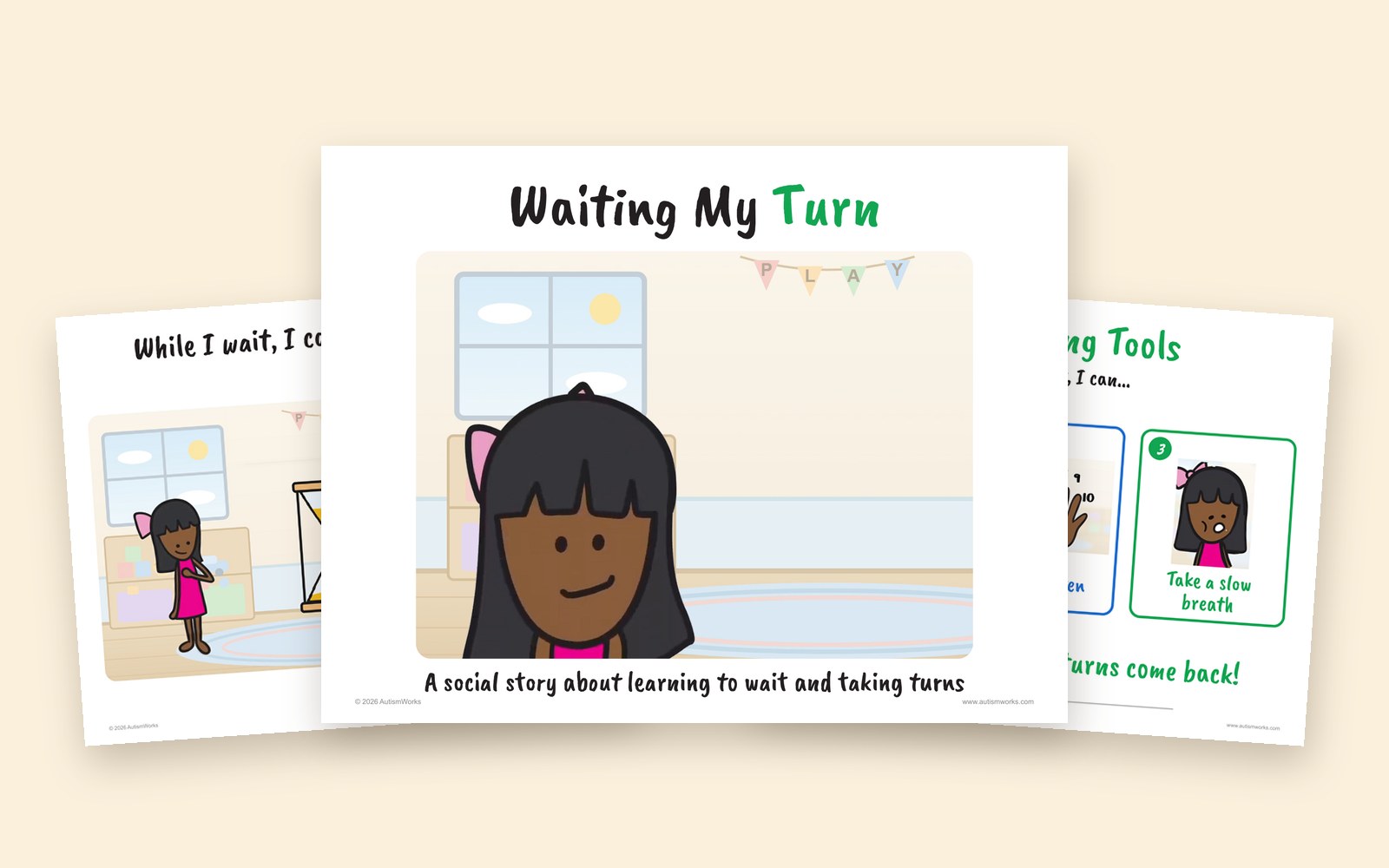
Ella’s animated story is about three minutes long. Watch it together, then say the chant together at the end.
Simple words, one idea per page, and the same Ella and Arnold pictures your child sees in the video.
Ella wants the ball NOW, but Arnold is still playing. Waiting feels hard, and that is okay. She asks for a turn, and Arnold says, “Not yet. Please wait.”
Ella watches the sand timer, counts to ten and takes a slow breath. Then Arnold says, “Your turn, Ella!” She waited, and she feels proud.
Ella gives Arnold a turn, he says thank you, and then a chant to say together: “My turn, your turn, turns come back!”
A recap of the 3 things, a waiting game, a “My Waiting Tools” poster with a line for the child’s name, and a one-page guide for grown-ups.
Before school or before bed. A calm moment is the easiest time to learn a new plan.
Watch the video together, then say the chant: “My turn, your turn, turns come back!”
Play the game on page 21 with very short waits. When the timer ends, give the turn, so your child sees that turns really do come back.
Play the three-minute video at circle time, put the poster up where the class waits or lines up, and say the chant together before a game with turns. A sand timer or any timer lets the whole group see the wait go by.
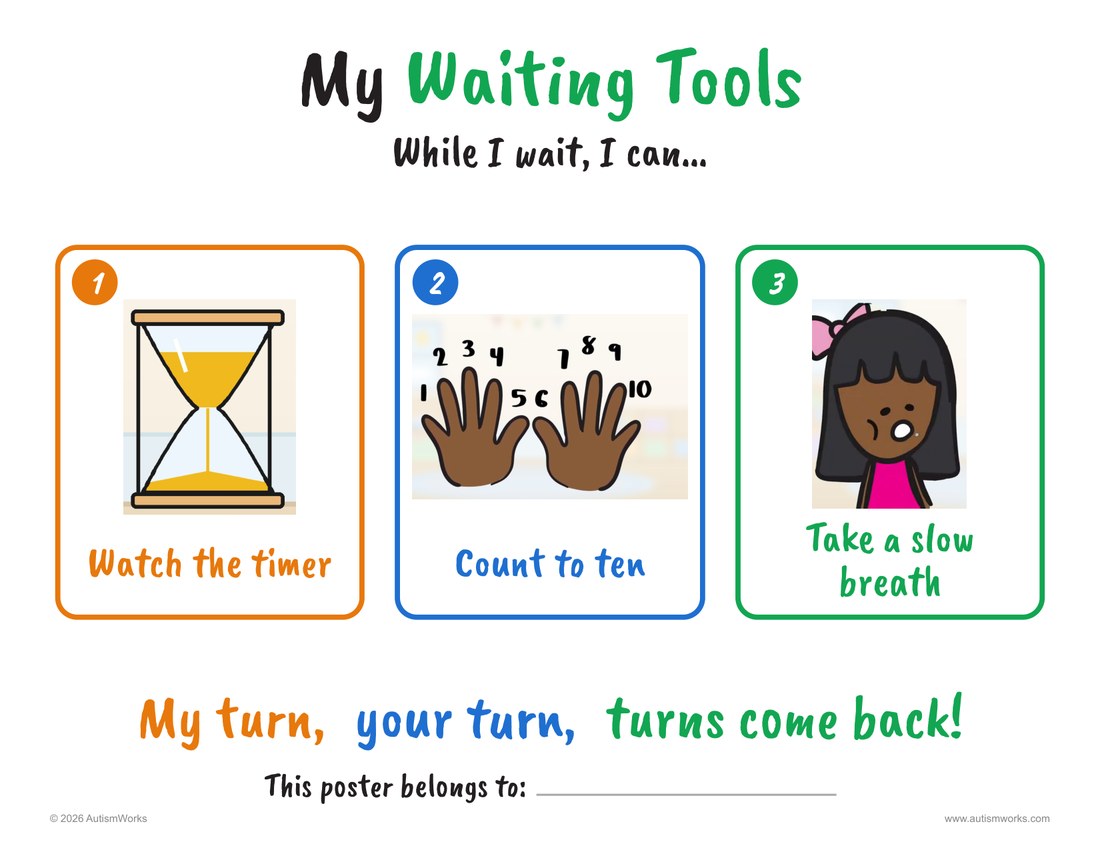
It is a printable story about learning to wait for a turn. Ella wants the ball while Arnold is playing. She learns that waiting is not no, waiting means soon, and that she can watch the timer, count to ten and take a slow breath while she waits.
Autistic children and any young child who finds waiting hard, from preschool and kindergarten to the early grades. It is made for parents, teachers, aides and therapists to use at home, in class and in therapy.
Yes. The animated “Waiting My Turn” video tells the same story in about three minutes, with a chant at the end. Watch it on this page or on the AutismWorks YouTube channel.
Yes. When her turn is done, Ella gives Arnold a turn, and the story ends with “My turn, your turn, turns come back!” For more on sharing, see the free Turn Taking story below.
No. Ella uses a sand timer in the story, but a sand timer or any timer you have can do the same job.
Yes. The story is a printable PDF in landscape format. Print the whole story, or only the poster on page 22 for the classroom wall, a desk or the fridge.
Often. Read it on calm days, a few times a week. The same words again and again help a child remember the plan when it is time to wait.
Yes. AutismWorks gives this story free to families and teachers.
Each one is free, printable and ready for a hard moment.
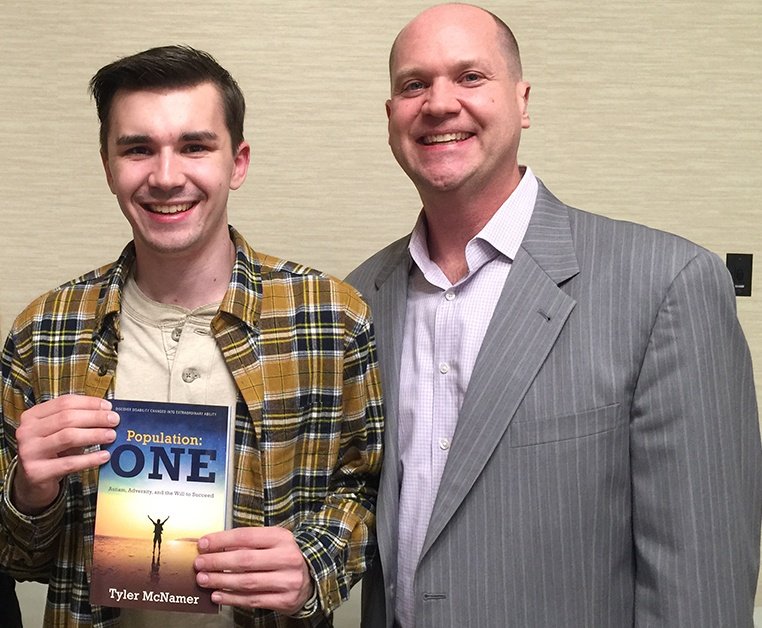
Tyler McNamer has autism and is the author of two books about growing up with it, Population ONE and Becoming ONE. With his dad, Jody, he makes these free social stories so parents and teachers have simple words for hard moments.